Mutual Funds
-

Types of Debt Instruments.
Debt refers to borrowings by Government of India, Public Sector Organizations and the Private sector companies to raise capital for their long term and short term needs. Debt instruments are segregated as Government debt and Private sector debt. Also as short term and long term debt. Indian Government borrows money every year from the public…
-
Asset Allocation Strategy.
A question which most Investors think about is “What should be my asset allocation Strategy”?. It is generally believed that Equity exposure should decrease as age increases and vice versa. Some investors think that Equity and Equity based products are too risky and avoid them altogether. Equity is, however, an essential part of any good…
-

Limitations of Mutual Funds.
Mutual Funds are a great Investment tool and have rewarded Indian Investors handsomely in the last twenty-five years. Mutual Funds suffer from a couple of limitations as mentioned below: 1. The Duplicity of selecting Stocks: When we invest in two Large Cap Funds or any category of Mutual Funds, both the Schemes contain many stocks…
-

Advantages of Exchange Traded Funds over Mutual Funds.
ETFs offer the following advantages over Mutual Funds: 1. Lower Fund Management Charges. 2. Eliminates duplicity or overlap of buying Stocks through different Mutual Funds. 3. Exposure to the entire Stock Market in a Country or Region through One or Two ETFs. 4. Global Exposure. 5. Easy Liquidity throughout the Year. 6. Tax implications as…
-
Index Funds and ETFs.
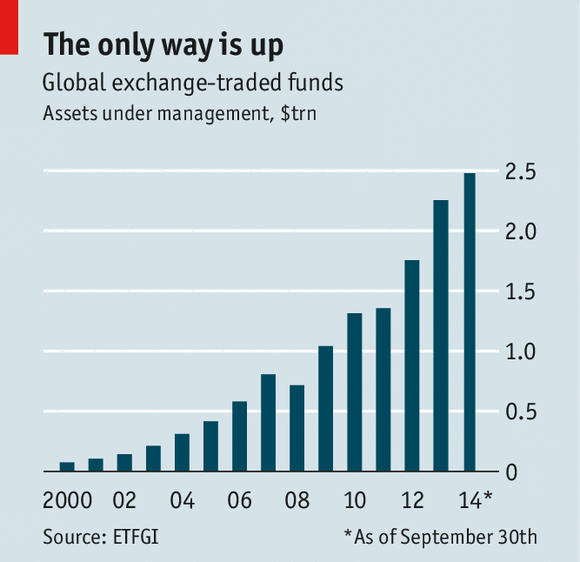
Index Funds are mutual funds, which are based on an underlying index, such as the Nifty 50 or the Sensex. Index Funds are passively managed funds, meaning that the fund manager plays an inactive role in managing the fund. These funds try to replicate the underlying index with the exact weight given to each stock…
-

Index.
An Index is a collection of Stocks. It is composed of Stocks from a particular Industry, Country, Continent or the World. It is also segregated as Developed Markets, Emerging Markets and Frontier Markets (Under-Developed Countries). An Index can be theoretical, or it can have practical applications in the form of Index Funds and ETFs. Indices…
-

International Investments.
Indians have been investing in our domestic stock market for several decades. The BSE Sensex was launched in 1979 and NSE Nifty in 1993. Mutual Fund Sector was privatised in 1992 after India’s liberalisation initiative and since 2010 Alternative Investments such as Venture Capital, Private Equity, Angel Investing, started gaining momentum. There is one area…